Latest News from The Musuneggi Financial Group

Small Business Guide

To Our Clients and Friends,

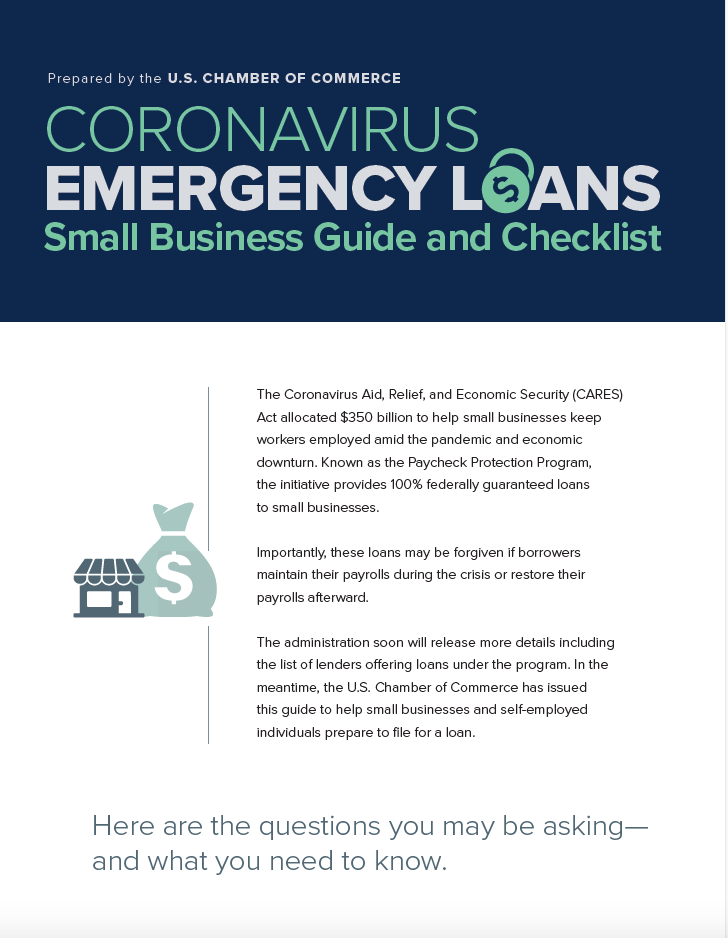
We hope that our message reaches you well during these extraordinary times. We are optimistic about the information and financial programs being made available to the business community and encourage you to work alongside your CPA, Attorney, and Business Banker to make the best decisions for you and your employees. We’re providing a resource from the U.S. Chamber of Commerce, the Coronavirus Emergency Loans Small Business Guide and Checklist to help you begin.

Please don’t hesitate to reach out if we may be of assistance. We wish you health, wellness, positivity and prosperity. 

With Regards,

Mary Grace, Christopher, and Christine

Click the image above to download the Coronavirus Emergency Loans Small Business Guide and Checklist


Let’s Connect and Get Updated

Let's Connect During the Difficult Time

During times like this, it’s critical that we meet and talk about your financial strategy and look at how things are going. We call it a strategy meeting, a sort of in-person (on the phone right now!) progress report regarding your financial life. Not only can we catch up, but I can answer any questions that might come to mind about your strategy, one-to-one and in real-time.
 
Questions like:

  • How are my cash reserves, do I need to work on my emergency fund?
  • Am I still on track, and what changes should I consider?
  • My accounts have declined, does an IRA conversion make sense?

Let’s set up a time to get together to talk soon. Contact us to set a time

This material was prepared by MarketingPro, Inc. for use by Christine Pikutis-Musuneggi, CRPC®, CLTC, LACP.

MarketingPro, H. Beck, Inc. and The Musuneggi Financial Group, LLC are not affiliated.

Rattled by the Market Drop? You’re Not Alone…

We witnessed an extraordinary move in the financial markets on Monday, March 9.

The Dow Industrials lost over 2,000 points, as Coronavirus fears continued to worry investors. At the same time, oil prices lost nearly 25 percent, on news that Saudi Arabia was dropping crude oil prices and raising production as well. Meanwhile, the 10-year Treasury bond yield touched an all-time low of 0.318 percent during the trading session, as unnerved investors looked for some stability.1

In times like this, we frequently hear that some find it difficult to stay committed to an investment program when fear has gripped the financial markets.

But for us, a quick look at recent history helps us keep these events in perspective.

Remember when the trade dispute with China ramped up back in February 2018? In just six trading days, stock prices had undergone a rollercoaster ride on their way to a 10-percent market correction. On February 8, 2018, CNBC reported that the Dow Industrials traveled 22,000-plus points over the course of February’s first full week of trading, due to trade-related fears.2

How about the 4th quarter of 2018? On October 10 of that year, the Dow saw an 800-point drop, largely due to rising interest rates and global economic concerns. And who can forget the holiday market trading two months later? It was a breathtaking event as the Dow lost over 600 points on Christmas Eve, then soared 1,000 points the day after Christmas.3,4

In the past few weeks, we’ll admit that we’ve done a few “double takes” at our computer screens, as we’ve watched major swings in stock prices and movements in the bond and crude oil markets.

But just like always, we are here to help you and your family answer any questions that might surface. Whatever decisions you’re considering, we’d be honored to support you through them. Reach out to us anytime.

Sincerely,

The Musuneggi Financial Group

This material was prepared by MarketingPro, Inc.

All performance referenced is historical and is no guarantee of future results. All indices are unmanaged and may not be invested into directly.


Citations.

1 – cnbc.com/2020/03/08/dow-futures-drop-700-points-as-all-out-oil-price-war-adds-to-coronavirus-stress.html [3/9/20] 

2 – cnbc.com/2018/02/09/dow-travels-20000-points-in-wild-week.html [2/8/18] 

3 – cnbc.com/2018/10/10/us-markets-bond-yields-and-data-in-focus.html [10/18/18] 

4 – cnbc.com/2018/12/26/us-futures-following-christmas-eve-plunge.html [12/25/18] 

“Meet” the Managers: Understanding Markets

A Great Opportunity to “Meet” Those Who Manage Investment Money

Take Advantage of This Opportunity to “Meet” The People Who Manage Investments

Even though we will no longer have this event in-person, you can still join us and Dunham & Associates for an educational webinar on market trends; and learn the thoughts of those who are actually investing client money. What are they doing? What do they think investors should do?
 
If you register for the event, you will receive information by email to join the meeting remotely. If you cannot participate, but still have questions, you can send them to us and we shall ask and share the answers after the event.
 
As trends come and go in the investment market, many people are working to stay up to speed with current knowledge; as well as current financial concerns.
 
We know that past performance is not indicative of future returns, but as you look to navigate these volatile markets, let the Dunham Money Managers walk you through what they believe is a sound approach to investing.

Tuesday, April 7th
6:00 PM

Email us to register or to submit your questions.

Are You Committing These Financial Illegalities?

Some people make money moves that may get them in trouble

Provided by Christine Pikutis-Musuneggi

Americans do many things with their money and invested assets, most of them on the up and up. However, there are exceptions; cases in which people unintentionally bend or break the law. Here are a few examples, from the cavalier to the ridiculous.

Signing a check that is not your own. Have you ever wondered, “If a relative is no longer able to sign their checks, may I sign for them?” The safe answer is yes – if you have been granted power of attorney (POA) for your relative. POA gives you the legal ability to handle any financial transactions on their behalf – including writing checks.1

However, depending on the state in which you reside, you may be permitted to sign on behalf of another as long as you follow some specific rules. First, you need to have written permission from the person on whose behalf you wish to sign. Second, make sure to clearly write “P.P.” before that person’s signature. This abbreviated form of the Latin “per procurationem” roughly translates to “by proxy” and indicates you have permission to sign on their behalf.1

Overestimating non-cash donations to a charity or nonprofit. Imagine this. Someone donates a van to a food bank. In the donor’s mind, that van is worth the original purchase price of $6,500. Unfortunately, the fair market value of the van turns out to be substantially less due to depreciation. However, the donor reports the value to the Internal Revenue Service (I.R.S.) at $6,500. If the I.R.S. disagrees (and it very well might, assuming decent documentation is available), the donor might be in for a tax penalty. It’s important to remember that this information should not be construed as tax or legal advice and may not be relied on for the purpose of avoiding any Federal tax penalty.2

Forgetting to report 100% of income. Some people intentionally misstate their incomes to the I.R.S., and other people neglect to report miscellaneous forms of income like royalties, freelancer payments, dividends, prizes, and so on. A penalty may await them.

The chances of forgetting the odd W-2 or 1099 form rise when a taxpayer moves during a year or works several jobs. Tips must also be taken into account when filing a federal tax return; the I.R.S. provides Form 4137 to help individuals determine any additional Social Security and Medicare taxes they may owe as a result of tips and wages not reported on an individual’s W-2 statement.3,4

Forgetting estimated tax payments. If an individual’s freelance income is significant enough that they expect to pay more than $1,000 in taxes from such activity, then estimated tax payments must be made quarterly to the I.R.S. Penalties may be triggered if quarterly deadlines are ignored.4

Deducting too much in business-linked expenses. This can also invite an I.R.S. penalty, and business owners, executives, and entrepreneurs can fall prey to this common tendency. The I.R.S. finds that less than 7% of such deductions are intentionally overstated or made up.5

Ruining money. Making U.S. paper currency or hard currency unusable is a federal crime. If someone intentionally or unintentionally defaces, perforates, glues together, or mutilates bills or coins to the degree that they can no longer be used in commerce, it is a violation of federal law.6

If you are guilty of negligence, it sure beats being guilty of fraud. The standard I.R.S. penalty for a reporting mistake on your 1040 form is 20% of the unreported amount. Contrast that with the 75% civil penalty for tax fraud. Of course, negligence can be viewed as fraud – and that alone should make people think twice about inaccurately stating details of their personal finances.7

Christine may be reached at 412-341-2888 or christine@mfgplanners.com

This material was prepared by MarketingPro, Inc., and does not necessarily represent the views of the presenting party, nor their affiliates. This information has been derived from sources believed to be accurate. Please note – investing involves risk, and past performance is no guarantee of future results. The publisher is not engaged in rendering legal, accounting or other professional services. If assistance is needed, the reader is advised to engage the services of a competent professional. This information should not be construed as investment, tax or legal advice and may not be relied on for the purpose of avoiding any Federal tax penalty. This is neither a solicitation nor recommendation to purchase or sell any investment or insurance product or service, and should not be relied upon as such. All indices are unmanaged and are not illustrative of any particular investment.


Citations:

1 – thelawdictionary.org/article/signing-a-letter-on-someone-elses-behalf/ [7/3/2018]

2 – investopedia.com/articles/pf/07/avoid_audits.asp [5/29/2018]

3 – irs.gov/forms-pubs/about-form-4137 [11/6/2018]

4 – irs.gov/newsroom/heres-how-and-when-to-pay-estimated-taxes [11/5/2018]

5 – irs.gov/businesses/small-businesses-self-employed/deducting-business-expenses [11/5/2018]

6 – usa.gov/currency [2/26/2018]

7 – irs.gov/tax-professionals/summary-of-preparer-penalties-under-title-26 [11/5/2018]

On The Mark: Coronavirus and the Markets

Presented by AssetMark


Key Takeaways

  • The Wuhan coronavirus has unnerved global equity markets so far in 2020. While still early, compared to the SARS outbreak in late 2002/early 2003, investors are concerned about the possible impact to economies and on markets.
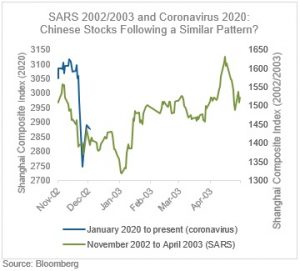
  • However, to date, Chinese stocks are responding in a manner remarkably similar how they reacted to the SARS outbreak in late 2002/early 2003. That is, after an initial shot straight down, equities stabilize and start to rebound as they digest the economic implications of the virus and government responses.
  • If markets continue to follow the SARS template and the policy response from Chinese and other central authorities calms investor nerves, already relatively cheap international stocks could receive an additional boost.

After the coronavirus was first reported to the World Health Organization (WHO) on December 31, 2019, global equity markets took a hit of varying degrees, with emerging market stocks falling over 4.6%. While reminiscent to the SARS outbreak in late 2002/early 2003, investors have been tempted to extrapolate a far more damaging and lasting impact from the coronavirus. For example, more deaths from the coronavirus than SARS have already been reported, and the response of Chinese authorities has been more forthright in quarantining entire cities. Such measures will certainly have more immediate and knock-on effects to global growth than during the SARS episode, given China has gone from the world’s sixth to second largest economy during this time.

Equally impressive, however, has been the response of China’s central bank, both in terms of injecting liquidity into the system and lowering targeted borrowing rates to soften any near-term market impact. It is perhaps due to these aggressive measures that Chinese stocks seem to be tracking the sharp sell-off and V-shape recovery pattern that they did during the earlier SARS episode (chart below). It may be that markets are seeing through this short-term volatility and anticipating only a brief (though substantial) drop in global economic growth.

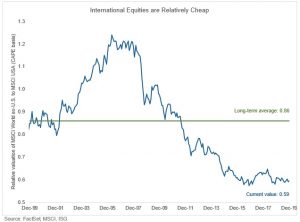
While it is encouraging that markets are currently following the previous SARS script, it should be acknowledged that a V-shaped recovery is not a given. Indeed, investors may still be tempted to dump international and emerging market stocks amid the unknown and open-ended nature of possible contagion. As a buffer against that uncertainty, it is helpful to remember that international stocks are trading at a fairly steep valuation discount relative to their US counterparts (chart below). At such inexpensive levels, foreign equities could offer investors an attractive source of additional returns, and certainly argues for portfolios remaining globally diversified.


AssetMark, Inc.

1655 Grant Street
10th Floor
Concord, CA 94520-2445
800-664-5345

IMPORTANT INFORMATION

This report is for informational purposes only, and is not a solicitation, and should not be considered as investment or tax advice. The information has been drawn from sources believed to be reliable, but its accuracy is not guaranteed, and is subject to change.

Investing involves risk, including the possible loss of principal. Past performance does not guarantee future results. Asset allocation alone cannot eliminate the risk of fluctuating prices and uncertain returns. There is no guarantee that a diversified portfolio will outperform a non-diversified portfolio in any given market environment. No investment strategy, such as asset allocation, can guarantee a profit or protect against a loss. Actual client results will vary based on investment selection, timing, and market conditions. It is not possible to invest directly in an index.

AssetMark, Inc. is an investment adviser registered with the Securities and Exchange Commission.
©2020 AssetMark, Inc. All rights reserved.

A Gift that Lasts: Life Insurance

February reminds us of the ones we love. This Valentine’s Day consider reviewing (or acquiring) life insurance to Insure Your Love. Watch the video from LifeHappens.org to learn more.


Life Happens: A Promise Kept

Life’s milestone moments usually require a promise—to love, cherish, guard and protect.

And an important part of keeping those promises is making sure your loved ones would be OK financially if something were to happen to you. That’s why there’s life insurance.

Keep your promise and insure your love.


If you’d like to review your insurance, contact us.

NAIFA Legislative Luncheon Recap

Christine Pikutis-Musuneggi, CRPC®, CLTC, LACP is past president of local and state chapters of the National Association of Insurance and Financial Advisors (NAIFA). She chaired the recent Legislative Luncheon hosting state lawmakers at LeMont Restaurant.

State Rep. Jason Ortitay, left, visits with NAIFA-PA President Steve Petrungaro, Treasurer Joe Marrazzo and Past President Christine Musuneggi at the NAIFA Legislative Luncheon in Pittsburgh. Jason Ortitay Steve Petrungaro Joseph Marrazzo Christine Pikutis-Musuneggi.


Christine with Mary Grace Musuneggi and Christopher Musuneggi at the Legislative Lunch.

The SECURE Act

Long-established retirement account rules change

Provided by Christine Pikutis-Musuneggi, CRPC®, CLTC, LACP

The Setting Every Community Up for Retirement Enhancement (SECURE) Act is now law. With it, comes some of the biggest changes to retirement savings law in recent years. While the new rules don’t appear to amount to a massive upheaval, the SECURE Act will require a change in strategy for many Americans. For others, it may reveal new opportunities.

Click the image for the AssetMark downloadable PDF of SECURE Act Summary.

Limits on Stretch IRAs. The legislation “modifies” the required minimum distribution rules in regard to defined contribution plans and Individual Retirement Account (IRA) balances upon the death of the account owner. Under the new rules, distributions to individuals are generally required to be distributed by the end of the 10th calendar year following the year of the account owner’s death.1

Penalties may occur for missed RMDs. Any RMDs due for the original owner must be taken by their deadlines to avoid penalties. A surviving spouse of the IRA owner, disabled or chronically ill individuals, individuals who are not more than 10 years younger than the IRA owner, and child of the IRA owner who has not reached the age of majority may have other minimum distribution requirements.

Let’s say that a person has a hypothetical $1 million IRA. Under the new law, your beneficiary should consider taking at least $100,000 a year for 10 years regardless of their age. For example, say you are leaving your IRA to a 50-year-old child. They must take all the money from the IRA by the time they reach age 61. Prior to the rule change, a 50-year-old child could “stretch” the money over their expected lifetime, or roughly 30 more years.

The new limits on IRAs may force account owners to reconsider inheritance strategies and review how the accelerated income may affect a beneficiary’s tax situation.

IRA Contributions and Distributions. Another major change is the removal of the age limit for traditional IRA contributions. Before the SECURE Act, you were required to stop making contributions at age 70½. Now, you can continue to make contributions as long as you meet the earned-income requirement.2

Also, as part of the Act, you are mandated to begin taking required minimum distributions (RMDs) from a traditional IRA at age 72, an increase from the prior 70½. Allowing money to remain in a tax-deferred account for an additional 18 months (before needing to take an RMD) may alter some previous projections of your retirement income.2

The SECURE Act’s rule change for RMDs only affects Americans turning 70½ in 2020. For these taxpayers, RMDs will become mandatory at age 72. If you meet this criterion, your first RMD won’t be necessary until April 1 of the year after you reach 72.2

Multiple Employer Retirement Plans for Small Business. In terms of wide-ranging potential, the SECURE Act may offer its biggest change in the realm of multi-employer retirement plans. Previously, multiple employer plans were only open to employers within the same field or sharing some other “common characteristics.” Now, small businesses have the opportunity to buy into larger plans alongside other small businesses, without the prior limitations. This opens small businesses to a much wider field of options.1

Another big change for small business employer plans comes for part-time employees. Before the SECURE Act, these retirement plans were not offered to employees who worked fewer than 1,000 hours in a year. Now, the door is open for employees who have either worked 1,000 hours in the space of one full year or to those who have worked at least 500 hours per year for three consecutive years.2

While the SECURE Act represents some of the most significant changes we have seen to the laws governing financial saving for retirement, it’s important to remember that these changes have been anticipated for a while now. If you have questions or concerns, reach out to your trusted financial professional.

Christine Pikutis- Musuneggi, CRPC®, CLTC, LACP may be reached at 412-341-2888 or christine@mfgplanners.com.


This material was prepared by MarketingPro, Inc., and does not necessarily represent the views of the presenting party, nor their affiliates. This information has been derived from sources believed to be accurate. Please note – investing involves risk, and past performance is no guarantee of future results. The publisher is not engaged in rendering legal, accounting or other professional services. If assistance is needed, the reader is advised to engage the services of a competent professional. This information should not be construed as investment, tax or legal advice and may not be relied on for the purpose of avoiding any Federal tax penalty. This is neither a solicitation nor recommendation to purchase or sell any investment or insurance product or service, and should not be relied upon as such. All indices are unmanaged and are not illustrative of any particular investment.

Citations.

1 – waysandmeans.house.gov [12/25/19]

2 – marketwatch.com  [12/25/19]