Money and Life

A Financial Power of Attorney is a Must… And Here’s Why

financial reviewBy Mary Grace Musuneggi

If you have accounts that are titled in your name only, you need to have a Financial Power of Attorney who can act on these accounts, if you are unable to do so.  The solution may not be to add someone else’s name to the account.  This could cause a gifting issue or other serious problems.  Many married couples believe that because all of their accounts are held jointly, they do not need a Power of Attorney.

But IRA’s are owned individually; and if you are disabled, your spouse cannot automatically act on your behalf for these accounts.  And if you are the person who normally handles an account for another, such as a parent or even an adult child, there may be times that you need to act on their behalf when they are not here to sign or give consent.  A Power of Attorney can help resolve this issue, too.  And with privacy laws, our firm is not permitted to give a child, a sibling, or even a spouse, information on another individual’s account, without written permission.

We are, therefore, requiring that all of our clients provide us with a copy of their Power of Attorney, or we will provide you with an “Authorization to Provide Information” form.  Please fax (412-341-0725) or mail this to our office or bring it to your next appointment.  If you are not prepared to do a complete Estate Plan, we do have attorneys on our team who will prepare a Financial Power of Attorney as a standalone document.

As financial consultants, we feel it is part of our responsibility to help our clients survive any unexpected life situations that may arise.  When you are in need of our help, we want to be in a position to help.  This is one way we hope to accomplish this goal.

So What Will You Do on Your Summer Vacation?

As our country begins to open after a long, planned shutdown helping to deter the spread of the Coronavirus, I am echoing the call of my friends and business associates who cannot wait to leave their homes.  Many are heading to the hair salon and then planning a vacation.  One friend admitted that she was planning to stop to get her hair cut on her way to the airport.  When I inquired as to where she was planning on going, she replied “anywhere”.

Although the whole reason we go to work is to earn a living so that we can be happy at home, as Americans, too much home, can be quite enough.  Being out and about, traveling, adventuring is a priority for most of us.  So, as you have been “hunkering down” over the last three months, what have you dreamt about doing?  Where do you want to go?  What’s the first place you will venture out to?

Visit our Facebook page and share with us, what you will do on your Summer Vacation 2020.  Your plans may be an inspiration to others. 

Be Prepared for Pandemic Tax Surprises

Information provided by Karen L. Vidt, Certified Public Accountant

Numerous new laws provide economic relief to individuals and businesses hardest hit by this year’s pandemic. This much-needed financial assistance, however, comes with a few strings attached.

Here are three potential surprises if you use the available economic relief packages:

Getting a tax bill for unemployment benefits. While the $1,200 economic impact payments most Americans received does not have to be reported as taxable income on your 2020 tax return, there is currently no such luck with unemployment benefits. In addition to paying federal taxes on your unemployment compensation, more than half of states also impose a tax on unemployment benefits.

What you need to do: See if your unemployment compensation check withholds a portion of your pay for taxes. Even if your check does have withholding for income tax purposes, the withholding amount may not be enough. If possible, talk to your state unemployment office and try to get withholding amounts revised.

Paying estimated tax payments. If you normally receive a paycheck from your employer, you may have never needed to write a check to the IRS to pay estimated future taxes. Your employer withholds your taxes from your paychecks and sends it to the IRS for you. If you’re collecting unemployment benefits, however, you may be required to pay tax on the unemployment benefits received during the first six months of 2020 by July 15, 2020.

What you need to do: Estimate the amount of tax you owe for all sources of income, then compare that number with the amount of money withheld from your income to pay these taxes. If necessary, send in quarterly estimated tax payments to the U.S. Treasury and, in some cases, state revenue departments. This must be done each quarter with the next payment due July 15. You may need to send money in on September 15, 2020 and January 15, 2021 as well.

Reporting emergency distributions from retirement accounts. You may withdraw up to $100,000 in 2020 from various retirement accounts to help cover pandemic-related emergency expenses without incurring penalties. While you will not be required to pay an early withdrawal penalty, you will still be subject to income tax when filing your 2020 tax return.

What you need to do: If you plan to withdraw funds from your retirement account, reserve enough of the money to pay the tax! The amount you reserve depends on your potential tax situation so call for a tax review before taking money out of the account.


Neither Musuneggi Financial Group nor H. Beck, Inc. offers tax advice. Please consult your tax advisor regarding your own specific tax situation.

Karen Vidt is unaffiliated with H. Beck Inc. and The Musuneggi Financial Group.

Musuneggi’s Featured in Video Interview

An interview by Elaine Shetler-Libent of Keller-Williams with The Musuneggi Financial Group’s Christopher S. Musuneggi, CFS, RFC and Christine Pikutis-Musuneggi, CRPC®, CLTC, LACP. They discuss financial issues related to the COVID-19 pandemic and resulting economic impacts. 

Or watch the video on YouTube

If you have questions about the COVID-19 pandemic and its economic impact on your situation, contact us for a financial review. 

Mom and Dad, Just Say “No!”

My mother had an expression, “When God turns a Mom on, He never turns her off.” I believe sometimes she used that to explain her reason for why she thought it was appropriate for her to interfere in my life and tell me what to do, even after I was grown, married and had a child of my own.  But it was also a reminder that she would always be there to help in anyway she could, if needed.  I believe most parents have that innate desire even when their kids are adults.

Sometimes that help to the adult child comes in the form of babysitting for grandchildren, or even pets, as housework, party planning, home repairs, food shopping, cooking, or even health care.  But many times, it comes in the form of straight out cash.

The Bank of Mom and Dad

When this happens, the money is often used for home improvements, tuition, down payments on a house, car payments, vacations, financing a business venture, paying legal fees for a divorce, or even helping the child get out of debt.  In more serious situations, it is used for day to day living expenses for the adult child.

And when this occurs, I cannot imagine any child who is not appreciative and grateful.  But………

As the parents age, retire; as income sources change or aging brings on health risks or the need to change housing options, several questions need to be addressed before the parent continues to be the “bank.”

What Comes Next?

Does the child have the expectations that the parent will continue to be a source of funds?

Does the child truly understand the parents’ financial situation?  Do they have a false sense of what the parents have?  Do they understand the impact on the parents’ financial situation as they are on a “fixed” income?

Can the child be financially independent without the help of the parent?

Have the parents made financial commitments to the child that they do not really have the financial resources to fulfill? Could this cause the parent to go into debt? To reduce their standard of living? Or jeopardize the parent’s future financial independence?

Who will be responsible for the parent’s income needs if the parents run out of money, need Long Term Care, or help staying in their home?

It Starts with Communication

One of the roles of a parent is to protect the child from danger.  Giving a child unrealistic financial expectations, allows you to create a potentially serious financial situation for you and your child.  Over the years in our practice we have seen parents sacrifice their security for the security of a child.  One of our best ways of making sure parent and child are on the same page is through our Family Meeting program.  We meet with parents and children and address these issues.  After these meetings, those parents who were able to share their excess funds with their children where happy that they were able to say “yes” and still live comfortably.  For those who were thinking of sharing money they could not really afford, were then able to explain to the children why they just had to say “no”.  If the transaction is good for all involved, just say “yes”.  If not….well….just say “no”.

It is all part of the job of that parent that God turned on.  There just might be a time to turn them off.

We Need to Talk About Estate Planning

IF YOU HAVE DONE YOUR ESTATE PLANNING…GREAT!  WE NEED TO TALK

IF YOU HAVE NOT-WHY NOT?  WE NEED TO TALK

If you have done your Estate Planning, we need to see that your beneficiary designations are coordinated.  If you are not yet done, we need to talk about the beneficiaries and titling of your assets.

Most of us have recognized that over the years, everything we do in the world of business and finance seems to require more and more paperwork. New consumer information laws require disclosure forms; then there are those forms to comply with the Patriot Act and those for the Privacy Act. And because we live in such a litigious society, there are forms to protect you from not getting the right information and forms to protect those who give you the information. All in all, everything requires a document or form of some sort.

If you are a client of The Musuneggi Financial Group, you have undoubtedly been reminded numerous times of the need to have an updated will, beneficiary forms, powers of attorney, living will and family letter. Although having these documents was always important, in today’s world they are critical. Over the years, our firm has too often had to be party to situations where the lack of the correct documents has cost our clients time and money; and even put strains on their businesses; or on their relationships with family members, spouses and business partners.

We, once again, want to encourage you to meet with your attorney to be sure your documents are up-to-date. If you do not have the proper documents, we want to encourage you to get these as soon as possible. If you don’t know an attorney, we will be glad to introduce you to one who is a specialist in the areas of estate and business planning. If you update your documents, be sure to contact us, so that we can help coordinate your beneficiaries with your updated wills.

The way that your assets are titled is extremely important as to how they will be handled in case of your death, divorce or any other life changing situation. Be sure all of your investments, savings and bank accounts are titled correctly.

The way that your assets are titled is extremely important as to how they will be handled in case of your death, divorce or any other life changing situation. Be sure all of your investments, savings and bank accounts are titled correctly.

A FINANCIAL POWER OF ATTORNEY IS A MUST…AND HERE IS WHY

If you have accounts that are titled in your name only, you need to have a Financial Power of Attorney who can act on these accounts, if you are unable to do so. The solution may not be to add someone else’s name to the account. This could cause a gifting issue or other serious problems. Many married couples believe that because all of their accounts are held jointly, they do not need a Power of Attorney.

But IRA’s are owned individually; and if you are disabled, your spouse cannot automatically act on your behalf for these accounts. And if you are the person who normally handles an account for another, such as a parent or even an adult child, there may be times that you need to act on their behalf when they are not here to sign or give consent. A Power of Attorney can help resolve this issue, too. And with privacy laws, our firm is not permitted to give a child, a sibling, or even a spouse, information on another individual’s account, without written permission.

We are, therefore, requiring that all of our clients provide us with a copy of their Power of Attorney or we will provide you with an “Authorization To Provide Information” Form. Please fax the form to 412-341-0725, mail it to our office, or bring it to your next appointment. If you are not prepared to do a complete Estate Plan, we do have attorneys on our team who will prepare a Financial Power of Attorney as a standalone document.

As financial consultants, we feel it is part of our responsibility to help our clients survive any unexpected life situation that may arise. When you are in need of our help we want to be in a position to help. This is one way we hope to accomplish this goal.


Financial advisors do not provide specific legal advice and this information should not be considered as such. You should always consult legal advisor regarding your specific situation.

Managing a Job Layoff

A layoff can be a nerve-wracking event.

  • How long will I be out of work?
  • Do I have a savings cushion that can last until I find a new job?
  • Will I be able to make the payments on my house?

Working with your financial advisor, you can begin to take stock of your situation, methodically address your priorities and try to weather this setback without radically restructuring your finances.

Managing a Layoff resource

To get started, download the PDF resource “Managing a Job Layout” and if you’d like to review your situation, contact us to schedule a conversation. 

Small Business Guide

To Our Clients and Friends,

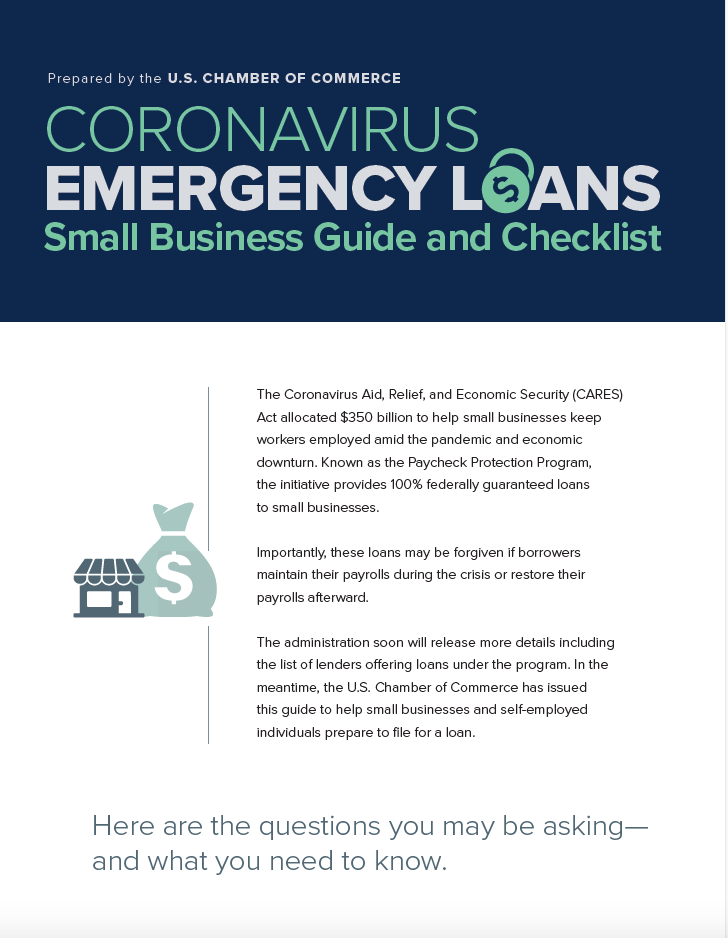
We hope that our message reaches you well during these extraordinary times. We are optimistic about the information and financial programs being made available to the business community and encourage you to work alongside your CPA, Attorney, and Business Banker to make the best decisions for you and your employees. We’re providing a resource from the U.S. Chamber of Commerce, the Coronavirus Emergency Loans Small Business Guide and Checklist to help you begin.

Please don’t hesitate to reach out if we may be of assistance. We wish you health, wellness, positivity and prosperity. 

With Regards,

Mary Grace, Christopher, and Christine

Click the image above to download the Coronavirus Emergency Loans Small Business Guide and Checklist


Rattled by the Market Drop? You’re Not Alone…

We witnessed an extraordinary move in the financial markets on Monday, March 9.

The Dow Industrials lost over 2,000 points, as Coronavirus fears continued to worry investors. At the same time, oil prices lost nearly 25 percent, on news that Saudi Arabia was dropping crude oil prices and raising production as well. Meanwhile, the 10-year Treasury bond yield touched an all-time low of 0.318 percent during the trading session, as unnerved investors looked for some stability.1

In times like this, we frequently hear that some find it difficult to stay committed to an investment program when fear has gripped the financial markets.

But for us, a quick look at recent history helps us keep these events in perspective.

Remember when the trade dispute with China ramped up back in February 2018? In just six trading days, stock prices had undergone a rollercoaster ride on their way to a 10-percent market correction. On February 8, 2018, CNBC reported that the Dow Industrials traveled 22,000-plus points over the course of February’s first full week of trading, due to trade-related fears.2

How about the 4th quarter of 2018? On October 10 of that year, the Dow saw an 800-point drop, largely due to rising interest rates and global economic concerns. And who can forget the holiday market trading two months later? It was a breathtaking event as the Dow lost over 600 points on Christmas Eve, then soared 1,000 points the day after Christmas.3,4

In the past few weeks, we’ll admit that we’ve done a few “double takes” at our computer screens, as we’ve watched major swings in stock prices and movements in the bond and crude oil markets.

But just like always, we are here to help you and your family answer any questions that might surface. Whatever decisions you’re considering, we’d be honored to support you through them. Reach out to us anytime.

Sincerely,

The Musuneggi Financial Group

This material was prepared by MarketingPro, Inc.

All performance referenced is historical and is no guarantee of future results. All indices are unmanaged and may not be invested into directly.


Citations.

1 – cnbc.com/2020/03/08/dow-futures-drop-700-points-as-all-out-oil-price-war-adds-to-coronavirus-stress.html [3/9/20] 

2 – cnbc.com/2018/02/09/dow-travels-20000-points-in-wild-week.html [2/8/18] 

3 – cnbc.com/2018/10/10/us-markets-bond-yields-and-data-in-focus.html [10/18/18] 

4 – cnbc.com/2018/12/26/us-futures-following-christmas-eve-plunge.html [12/25/18]